
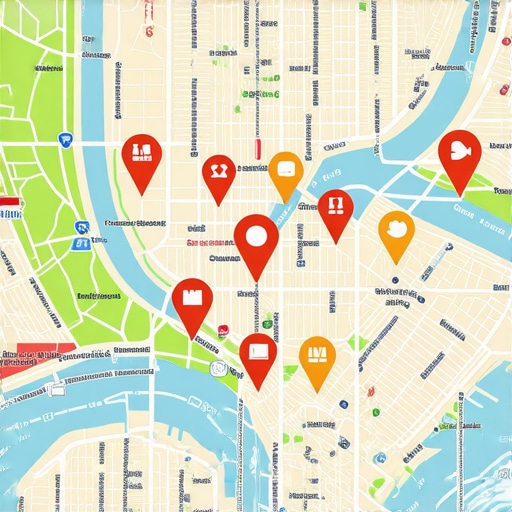
I remember the first time I realized my business wasn’t showing up on Google Maps when locals searched for services I offered. It was a gut punch. I was pouring effort into my shop, but online visibility? That was a whole different story. My phone barely rang, and customers were going to competitors who knew the secret sauce to ranking high on Google Maps. That lightbulb moment hit me hard — if I didn’t get this right, I’d be invisible in my own city. And let me tell you, that’s a tough way to run a business.
Why Local Search Rankings Matter More Than Ever in 2024
Today, more than 70% of consumers look for local businesses online before making a purchase. That’s a staggering number. If your business isn’t showing up at the top of Google Maps when locals search, you’re missing out on a flood of potential customers. It’s not just about being found; it’s about standing out amid fierce competition. And with Google’s algorithms constantly evolving, staying ahead requires more than just basic listing info. You need a strategic approach that adapts to the latest trends and best practices, especially here in Louisiana where local flavor and community ties matter.
Early on, I made the mistake of assuming that simply creating a Google My Business profile was enough. Wrong. I overlooked key factors like consistent NAP (Name, Address, Phone Number) information and neglecting reviews. That mistake cost me valuable time and lost business opportunities. Trust me, I’ve been there. For a deep dive into the most effective tactics, check out this comprehensive guide on local search optimization for NOLA businesses.
So, if you’ve faced similar frustrations, you’re not alone. The good news? With the right strategies, you can flip the script. In the next sections, I’ll share proven steps to help your Louisiana business climb those local rankings and dominate your niche in 2024. Ready to become a local search hero? Let’s get started!
Is Google Maps Optimization Actually Worth the Hype?
That’s a fair question. I’ll admit, I was skeptical at first. I wondered if all the effort was really worth it or if I was just chasing digital shadows. Early mistakes, like ignoring customer reviews or neglecting photos, made me doubt the process. But as I refined my approach, I saw real results — more calls, more foot traffic, and a stronger local reputation. The truth is, Google Maps is a powerful tool for local visibility, especially here in Louisiana where community connections matter. For a detailed look at how to get started, visit this resource on local SEO secrets.
Optimize Your Google My Business Profile for Louisiana Appeal
Start by claiming and verifying your Google My Business (GMB) listing. Make sure all your information—name, address, phone number—matches your website and other online directories exactly to avoid confusion. Use local keywords naturally within your business description, like “best crawfish boil in New Orleans” or “Louisiana Cajun cuisine”. Upload high-quality photos showing your location, products, and happy customers. This builds trust and gives Google signals that your business is active and relevant. For more detailed insights, check this guide.
Many local business owners in Louisiana fall prey to misconceptions about Google Maps optimization, thinking they can rank higher simply by adding keywords or posting photos occasionally. But let’s dig deeper — the truth is, most people overlook the nuanced factors that influence rankings and fall into common traps that hinder their visibility.
Why Most People Misunderstand Local SEO for Google Maps
One widespread myth is that creating or claiming a Google My Business (GMB) listing is enough. In reality, without consistent updates, reviews, and engagement, your listing can quickly become stagnant, lowering your chances of ranking higher. Google’s algorithms prioritize active, trustworthy, and relevant listings, not just a static presence. For example, neglecting review management can hurt your reputation and rankings — studies show that businesses with more positive reviews tend to rank higher in local searches (Moz).
Another misconception is that keyword stuffing in your business description or reviews will boost your rank. This outdated tactic can actually harm your credibility and lead to penalties. Instead, integrating natural local keywords and focusing on genuine customer interactions enhances your relevance and trustworthiness.
Many underestimate the importance of NAP consistency across all online platforms. Inconsistent business name, address, or phone number can confuse Google and users alike, diminishing your local authority. This is especially critical here in Louisiana, where community trust and familiarity matter immensely. For advanced strategies, check out this guide.
What Advanced Marketers Know That Most Don’t
Effective Google Maps optimization involves more than just the basics. It’s about understanding Google’s evolving ranking signals, like user engagement metrics—clicks, calls, and direction requests—that indicate how relevant your listing is to local searchers. Leveraging structured data markup, such as Schema.org, can also boost your visibility by providing Google with clearer context about your business.
Additionally, integrating your GMB profile with your website’s local content and earning high-quality backlinks from local directories or community sites can dramatically improve your rankings. The key is a holistic approach, combining technical SEO, reputation management, and local engagement.
Beware of the trap of ignoring mobile optimization. Over 80% of local searches happen on mobile devices, so if your website or GMB listing isn’t mobile-friendly, you’re missing out on a significant portion of local traffic. For detailed tactics tailored to Louisiana businesses, visit this resource.
Have you ever fallen into this trap? Let me know in the comments! Mastering these nuances can make the difference between being invisible or dominating your local market in 2024.
How do I keep my Google Maps rankings strong over time?
Maintaining your Google Maps visibility is an ongoing process that demands the right tools and consistent effort. Over the years, I’ve found that leveraging specialized software and adopting systematic routines can make all the difference in staying ahead of local competitors. To ensure your listings stay optimized, consider integrating tools like BrightLocal and Whitespark, which I personally rely on for tracking rankings, managing reviews, and auditing local citations. These platforms provide actionable insights, automate reporting, and help identify emerging opportunities, saving you precious time.
For example, BrightLocal’s Local Search Rank Checker allows me to monitor how my business ranks for targeted keywords across different regions daily. This immediate feedback helps me tweak my strategies proactively instead of reacting too late. Similarly, Whitespark’s Citation Finder uncovers new high-quality local directories where I can list my business, ensuring my NAP consistency remains intact, which is crucial for long-term success.
Beyond software, I emphasize the importance of maintaining your Google My Business profile regularly. This includes responding promptly to reviews, updating photos, and posting fresh content. I schedule weekly review audits using these tools to identify negative reviews early and respond professionally, which boosts your reputation and signals activity to Google. Over time, this consistent engagement establishes trust and can even improve your rankings naturally.
Looking ahead, I believe automation and AI-powered insights will play an even bigger role in local SEO. Machine learning algorithms will increasingly help us predict ranking fluctuations and suggest personalized optimization tactics. Embracing these advancements now will prepare your business to adapt quickly and maintain dominance in your local market.
If you want to take your local rankings to the next level, start by trying out a comprehensive ranking tracker like BrightLocal or Whitespark. Regularly review your data, adjust your strategies accordingly, and never underestimate the power of consistent engagement and citation management. For more advanced tactics, explore this guide on long-term local SEO success.

The Hardest Lesson I Learned About Google Maps Rankings
Early on, I believed that claiming my Google My Business listing was the magic bullet. It wasn’t. The real challenge was maintaining an active, engaging presence. I learned that consistent review management, fresh photos, and regular updates keep your listing alive and relevant. Without this, your rankings can quickly plateau or decline, especially here in Louisiana where community trust is everything.
How I Discovered the Power of Local Citations and Engagement
Initially, I underestimated the importance of local backlinks and citations. It turns out, Google values your connections within the community just as much as your online activity. Earning backlinks from local directories and partnering with community events boosted my visibility significantly. This taught me that local SEO is a holistic effort—it’s not just about keywords but about genuine engagement and reputation building.
What I Wish I Knew About Mobile Optimization
One of my biggest lightbulb moments was realizing over 80% of local searches happen on mobile devices. If your website or GMB profile isn’t mobile-friendly, you’re leaving money on the table. Investing in a responsive design and quick-loading pages ensured that when locals searched for my services, they could find me easily and instantly, making the difference in closing deals.
My Essential Toolkit for Local SEO Success
Tools like BrightLocal and Whitespark became my best friends. They automated rank tracking, citation audits, and review monitoring—saving me countless hours. I trust these platforms because they offer actionable insights and help me stay ahead of competitors. Combining their data with consistent engagement on my GMB profile was a game-changer for my Louisiana business.
Keep Pushing Forward—Your Local Business Deserves It
Mastering Google Maps optimization isn’t a one-time effort; it’s an ongoing journey. The strategies I’ve shared can transform your local visibility and bring your business into the spotlight. If you’re ready to elevate your game, start today. Your community is waiting to discover what you offer.
Reading through this post really hit home for me. When I started focusing on optimizing my Google My Business profile for my restaurant here in Baton Rouge, I underestimated how crucial consistent updates and active engagement are. Just posting some photos and basic info wasn’t enough—I’ve seen firsthand how reviews, fresh content, and local backlinks can really move the needle. It also made me think about how mobile optimization plays a huge role, especially since most of my customers find us via their phones. I’ve been experimenting with posting weekly updates and responding to reviews more promptly, and I’ve noticed a gradual improvement in our local search presence. Has anyone here found particular strategies that helped accelerate their rankings? I’m curious about what works best for others managing busy schedules but still wanting to stay ahead in local SEO.
This post hits close to home for me. When I first started focusing on local SEO in Lafayette, I overlooked several key factors that now seem obvious—like the importance of NAP consistency and timely review responses. I was skeptical about how much effort was really needed but quickly realized that active engagement and regular updates are what truly make a difference. One thing I’ve found effective is using tools like Whitespark to monitor citations and keep NAP information consistent across directories. It also helped me understand that mobile optimization isn’t just nice to have—it’s essential, given that most local searches are on smartphones. Has anyone here experimented with incorporating local schema markup? I’ve heard it can give a slight edge in search rankings, but I’d love to hear if it’s worth the extra effort.
This article really hits home for me. I remember the frustration of not appearing on Google Maps despite putting in so much effort in my Baton Rouge-based bakery. It’s clear now that active management of your GMB profile—like responding to reviews and posting regularly—is just as important as claiming the listing in the first place. I’ve started scheduling weekly updates and addressing reviews promptly, and I’ve seen some positive signs toward higher rankings. I also realized that mobile optimization is critical, especially since most local searches happen on smartphones. Has anyone tried using any specific tools for review management or citation cleanup that have made a noticeable difference? I’d love to hear what others are using to maintain and improve their local rankings effectively. Also, does anyone have insights into local schema markup? I’ve read it could give a slight edge, but I wonder if it’s worth the effort for small businesses like mine.
This post really resonated with me, especially the emphasis on active engagement and the importance of local citations. I run a small boutique in Monroe, and I’ve noticed that consistent updates, reviews, and local backlinks have noticeably boosted our visibility on Google Maps. It’s clear that a static listing isn’t enough anymore, especially with Google’s evolving algorithms. I’ve been contemplating adding schema markup to our website but wasn’t sure if it makes a tangible difference in local rankings. Has anyone here experimented with schema for small, local businesses? I’d love to hear if it’s worth the additional effort. Also, I’ve observed that responding promptly to reviews creates a stronger community trust—something that’s really valuable in Louisiana’s tight-knit towns. What other small but impactful tactics have others found effective for maintaining strong local rankings long-term? I’m eager to learn from this community’s experiences to keep improving our online presence.
This post really hits home for me, especially as someone who’s struggled to get my small café in Baton Rouge to appear prominently on Google Maps. I’ve learned that consistency is everything—regularly updating photos, responding to reviews, and keeping NAP info accurate have made a real difference. I also started experimenting with local schema markup on my website; while I haven’t seen a huge jump yet, I believe it helps provide clearer signals to Google about my business’s relevance. Mobile optimization is another factor I can’t overlook — especially since most of our customers find us via their phones. One thing I’m curious about is how other small business owners balance effort and results when managing their local SEO. Do you focus more on reviews or backlinks? Or perhaps on local content? Would love to hear what strategies others find most effective without overwhelming their day-to-day operations.
Reading this post really struck a chord with me. I own a boutique in Lafayette, and I’ve learned firsthand how essential active management is to maintaining Google Maps rankings. Initially, I thought simply claiming my GMB profile would be enough, but I quickly realized that regular updates, review responses, and local backlinks are what truly move the needle. I’ve started to implement weekly review responses and post new photos, which seem to boost visibility gradually. What I’m curious about is how others balance their efforts between engaging reviews, local backlinks, and on-site SEO like schema markup. Do you find one tactic to be more impactful than others? Also, with the ever-changing dynamics of Google’s algorithms, what tools or strategies have others found most effective for staying ahead consistently? It’s inspiring to see how community-focused strategies can really elevate a small business here in Louisiana.
This post really resonated with my experience. I run a small shop in Baton Rouge, and I used to think that just claiming my Google My Business listing was enough. However, I’ve since learned that active management, especially responding to reviews and updating photos regularly, makes a huge difference. I’ve also started focusing more on local backlinks and ensuring my NAP info is consistent across all platforms. One thing I’ve noticed that’s been overlooked sometimes is the importance of engaging with the community beyond just online activity — hosting local events or sponsoring neighborhood initiatives can indirectly boost your local SEO by building brand trust and generating local backlinks. Has anyone else found community engagement to be an impactful part of their local SEO strategy? I’d be eager to hear how others balance their time between online optimization and real-world local relationships.